
Fully Automatic Fruit Juice Production Line – Apple, Mango, Pineapple, and Kiwi Juice Processing Line
Fully automatic beverage production line equipment can press various fruits to produce fresh fruit juice beverages, commonly including: apples, oranges, strawberries, lemons, watermelons, mangoes, bananas, grapes, lychees, pineapples, dragon fruit, kiwis, pears, passion fruit, blueberries, cantaloupe, peaches, cucumbers, tomatoes, and more. These fruits can be juiced individually, blended together, or combined with tea, dairy products, sparkling water, and other ingredients to create a wide variety of flavored beverages.
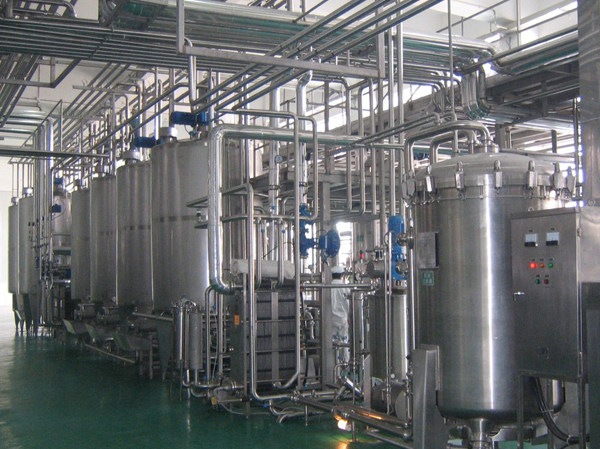
The entire juice beverage production line is constructed from 304/316 stainless steel, meeting food safety and hygiene standards.
Equipped with a CIP (Clean-in-Place) system to ensure equipment hygiene. Capable of processing different types of fruits, making it suitable for the production of various juice beverages.
Production capacity and product specifications can be adjusted according to customer requirements.
Energy-saving technology is employed to reduce energy consumption.
Wastewater and waste material discharge are minimized during the production process. This juice beverage processing production line is a complete set of equipment designed for the large-scale processing of fruit and vegetable raw materials, suitable for handling berry-type raw materials such as kiwifruit, tomatoes, grapes, blackberries, blueberries, strawberries, raspberries, mulberries, oranges, tangerines, mandarins, watermelons, and cantaloupes.
Detailed introduction to the fully automatic production line equipment:
Raw Material Processing System: Removes impurities such as soil and pesticide residues from the surface of the fruit. Crushes the fruit into small pieces to facilitate subsequent juicing.
Uses a belt-type juicer or airbag juicer to extract juice.
Formulation System: Mixes the juice with auxiliary ingredients such as sugar, acids, and stabilizers according to the formula ratio to adjust the taste and nutritional content.
Sterilization System: Instantaneous sterilization at 135–150°C to preserve the juice’s nutritional value and flavor.
Pasteurizers are suitable for low-temperature sterilization, maintaining the juice’s natural characteristics.
Filling and Packaging System: Filling equipment such as PET bottles, glass bottles, or cans is selected based on the packaging format.
CIP Cleaning System: Automatically cleans pipes and containers along the production line to ensure hygiene.
Process Flow of the Juice Production Line Equipment
- Raw Material Selection and Washing: Select fresh, ripe fruits and remove any rotten or pest-damaged fruits.
Thoroughly wash the fruit surfaces using washing equipment. - Crushing and Juicing: Crush the washed fruits and extract the juice using a juicer.
Color-preserving agents may be added during juicing to prevent oxidation and discoloration of the juice. - Filtration and Clarification: Perform coarse and fine filtration on the juice to remove pulp and suspended solids, resulting in clear juice.
- Formulation: Add auxiliary ingredients such as sugar, acid, and stabilizers according to the product formula to adjust the juice’s sugar-to-acid ratio and taste.
- Sterilization: Use UHT or pasteurization to kill microorganisms in the juice and extend the product’s shelf life.
- Filling and Sealing: Cool the pasteurized juice to the appropriate temperature for filling. Use sealing equipment to seal the containers, ensuring the product is airtight.
- Packaging and Inspection: Label the products, apply inkjet codes, and print production information. Conduct quality inspections, such as light inspection, to ensure the products meet specifications.
- Finished Product Storage: Pack qualified products into boxes for storage or direct shipment.
Translated with DeepL.com (free version)