
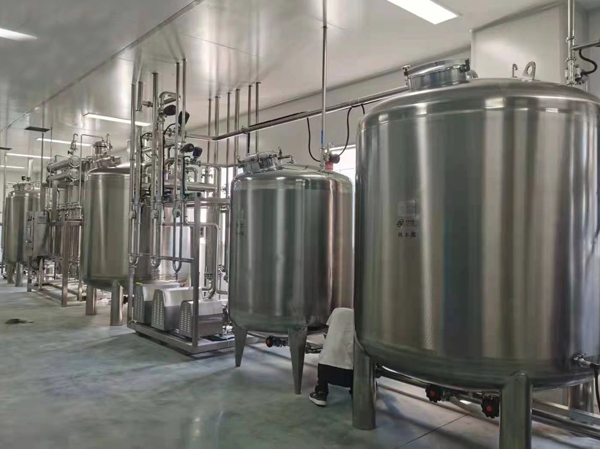
Industrial tea beverage production line: The complete difference between raw tea beverages and ripe tea beverages. First, let’s talk about the processing flow of Shanghai Zhenyan Machinery Equipment. The hardware of the entire beverage production line equipment (pretreatment → extraction → filtration and clarification → blending → sterilization → aseptic filling) is mostly universal, and the real differences come from the pre fermentation of raw materials, extraction parameters, clarification process, flavor substances, and formula system.
Fundamental differences in raw materials
- Raw tea ingredients (sun dried green tea)
Fresh leaves → withering → rolling → sun drying, no artificial pile fermentation; Tea polyphenols, catechins, and caffeine are high in content, with many bitter substances and a slightly cold nature. - Raw materials for ripe tea
Sun dried green tea with additional artificial wet fermentation (45-60 days of high-temperature and high humidity microbial transformation); A large amount of tea polyphenols oxidize and polymerize to produce theaflavins and tea polysaccharides, significantly reducing bitterness. Tea has a mild nature and comes with aged, jujube, and glutinous aromas.
Differences in Process Parameters of Beverage Production Lines
- Raw material pretreatment
-Raw tea: lightly broken; Protect the fresh and refreshing floral fragrance first; Light cleaning force to avoid loss of fragrance; Strict oxygen and antioxidant barrier throughout the production process (adding VC/isoVC sodium to prevent the soup color from quickly turning reddish brown)
-Mature tea: moderately crushed to release tea polysaccharides and aged aroma; Add a rapid water washing process to remove odors and dust; No need for a strong antioxidant system - Extraction (extraction tank/countercurrent extraction equipment)
Project: Raw and ripe tea beverages|
Temperature: 70-80 ℃ for low-temperature extraction to prevent high temperatures from exacerbating bitterness and damaging the refreshing aroma; High temperature extraction at 85-95 ℃, fully dissolving theaflavins and sweet substances; Low temperature cold extraction can also be used to make high-end smooth products
Tea water ratio: Slightly diluted, controlling polyphenol dissolution to avoid excessive astringency; Can have a higher solid content, with a rich and full-bodied red color
Protection method: nitrogen protection, short-term leaching, inhibition of oxidation; Low oxidation risk and longer extraction time - Filtration&clarification (centrifugation, membrane filtration, enzymatic hydrolysis)
Difficulties in raw tea: turbidity and severe sedimentation after cooling
Tea polyphenols and caffeine are easily complexed and precipitated; Tannase hydrolysis and ultrafiltration clarification are commonly used in production; Strict temperature control, cooling, and filtration are necessary, as the shelf life is prone to discoloration and turbidity
Mature tea has better stability
Large molecules have already been degraded by microorganisms during the pile stage; Low sedimentation risk; The clarification process is simpler and the filtration cost is lower; Soup color red brown stable - Allocation section
Raw tea: mainly refreshing and sweet; PH control weak acid; Often paired with vitamin C color protection; Make more sugar free/low sugar refreshing tea drinks
Mature tea: mellow and sweet; No need for strong color protectants; Suitable for making slightly sweet and cereal flavors (glutinous and jujube); Tea polysaccharides bring a smooth and thick sensation - Sterilization and aseptic filling
The equipment models (UHT instant sterilization, aseptic filling machine) can be shared:
Raw tea: Try to use short-term high-temperature sterilization or HPP low-temperature sterilization to reduce aroma damage and deepen soup color
Mature tea: Strong heat resistance and stability, with less loss of traditional UHT sterilization flavor
Difference between sensory and physicochemical indicators of finished products
- Soup color
Raw tea beverage: golden yellow, light orange yellow, translucent; After being stored for a long time, it slowly turns deeper;
Mature tea beverage: reddish brown, wine red, rich and translucent. - Aroma and taste
Raw tea: fragrant, floral and fruity, fresh and slightly astringent, with obvious aftertaste;
Mature tea: aged aroma, jujube aroma, glutinous aroma, smooth and mellow, with extremely low bitterness. - Main substances
Raw tea: high EGCG (catechins); Mature tea: higher content of theaflavins and tea polysaccharides
Production line selection and cost characteristics
- Shared equipment: The basic hardware of the entire production line (extraction tank, filtration unit, UHT sterilization machine, sterile filling machine) can be switched to produce raw tea/ripe tea beverages separately by switching raw materials
- Differentiated selection
To make high-quality raw tea beverages: it is recommended to choose low-temperature sealed extraction, nitrogen protection system, ultrafiltration clarification equipment, and color protection ingredient system
Making ripe tea beverages: higher process tolerance, simplified equipment configuration, better production stability, and easier shelf life control
Market product positioning
Raw tea drinks: mainly refreshing, refreshing, and youthful sugar free tea drinks; Suitable for summer drinks
Mature tea beverage: warm and mellow, warm and palatable to the stomach; Suitable for autumn and winter, health oriented tea drinks