
Key Equipment and Daily Maintenance of Fully Automatic NFC Juice Beverage Production Lines
What are the key components of fully automatic NFC fruit washing, pressing, and juice beverage production lines? The key equipment for NFC juice making machine is as follows:
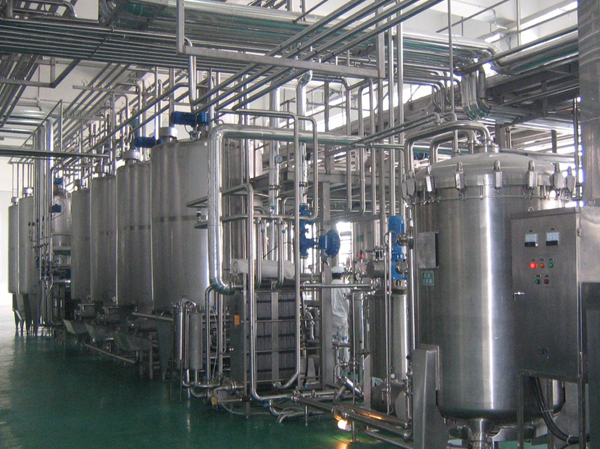
Equipment of NFC Juice Beverage making machine
Juicing Equipment
- Screw Juicer: This machine uses the rotation of a screw shaft to push the fruit pulp, separating the juice during the pressing process. It offers advantages such as high juice yield and ease of operation.
- Centrifugal Juicer: Utilizes centrifugal force to separate juice from the pulp. It offers high juicing efficiency, supports continuous production, and is suitable for large-scale operations.
Filtration Equipment
- Plate-and-Frame Filter Press: Through the squeezing action of the plates and frames, solid impurities in the juice are retained on the filter plates, achieving solid-liquid separation. It provides excellent filtration results and can handle high-concentration suspensions.
- Diatomaceous Earth Filter: Utilizes diatomaceous earth as a filtration medium to effectively remove fine impurities from the juice, resulting in high clarity.
Blending Equipment
- Blending Tank: Equipped with a mixing mechanism to thoroughly blend various ingredients such as juice, sugar, acids, and additives. The tank typically features a jacket for temperature control.
- Dosing Equipment: Includes devices such as electronic scales and flow meters, used to precisely measure the addition of various raw materials to ensure consistent product quality.
Sterilization Equipment
- Ultra-High Temperature (UHT) Sterilization Equipment: Heats juice to 135–150°C for a short duration to kill microorganisms and spores, then rapidly cools it to maximize the retention of nutritional components and flavor.
- Pasteurization Equipment: Typically heats juice to 75–90°C and holds it at that temperature for a specific duration, killing pathogenic bacteria and most microorganisms in the juice. This method is suitable for juice products that are sensitive to high temperatures.
Filling Equipment
- Glass Bottle Filling Machine: Utilizing atmospheric or isobaric filling principles, this machine accurately fills juice into glass bottles and completes the capping process. It is suitable for filling glass bottles of various capacities.
- Plastic Bottle Filling Machine: Typically employing rotary filling technology, this machine enables high-speed, precise filling and can be integrated with equipment such as plastic bottle blow molding machines to form an automated production line.
- Can Filling Machine: Equipped with high-speed filling and sealing capabilities, it accommodates cans of various specifications and is commonly used for filling carbonated fruit juice beverages and similar products.
Maintenance of the NFC Fruit Beverage making machine
Maintenance of the NFC fruit beverage production line equipment is crucial for effectively extending equipment lifespan and ensuring product quality and production safety. The following are the primary maintenance methods:
Daily Maintenance
- Equipment Cleaning
Surface Cleaning: After each day’s production, wipe down the equipment surfaces with a damp cloth to remove dust, stains, and residues.
Internal Cleaning: Disassemble washable components, such as filters and nozzles, and thoroughly clean them with specialized cleaning agents to ensure no residues remain.
Pipe Cleaning: Regularly clean and disinfect pipes to prevent blockages and bacterial growth. - Inspect Equipment Condition
Fastener Inspection: Check bolts, nuts, and other fasteners for looseness and tighten them promptly.
Lubrication: Check oil levels at lubrication points and replenish lubricant as needed.
Electrical System: Check that wires and cable connections are secure, ensuring there is no damage or looseness.
Regular Maintenance
- Precision Filter
Pre-startup Venting: Remove air from the filter to ensure effective filtration.
Regular Backwashing and Cleaning: Backwash and clean the reverse osmosis system to prevent clogging. - Ozone Generator
Monitor Ozone Output: Regularly check the ozone output to ensure effective disinfection.
Monitor the Ozone Generator: Monitor oxygen pressure and current intensity to ensure normal operation. - Filling Equipment
Piping and Pump Maintenance: Regularly inspect piping, fittings, and water pumps to ensure there are no leaks.
Lubrication of Pneumatic Components: Lubricate air lines and pneumatic components to prevent wear.
Electrical Control System Inspection: Regularly inspect the electrical control system to ensure circuits and components are functioning properly. - Packaging Equipment
Sealing Machine: Inspect electrical connections to prevent loose connections; regularly clean heating components.
Printer: Check the ribbon and heating temperature; regularly clean the print head to ensure clear printing.
Seasonal Maintenance
Thorough Cleaning: Thoroughly clean and disinfect equipment during seasonal transitions.
Equipment Storage: If equipment is to be idle for an extended period, it should be properly sealed and stored in a dry environment to prevent rust and damage.