
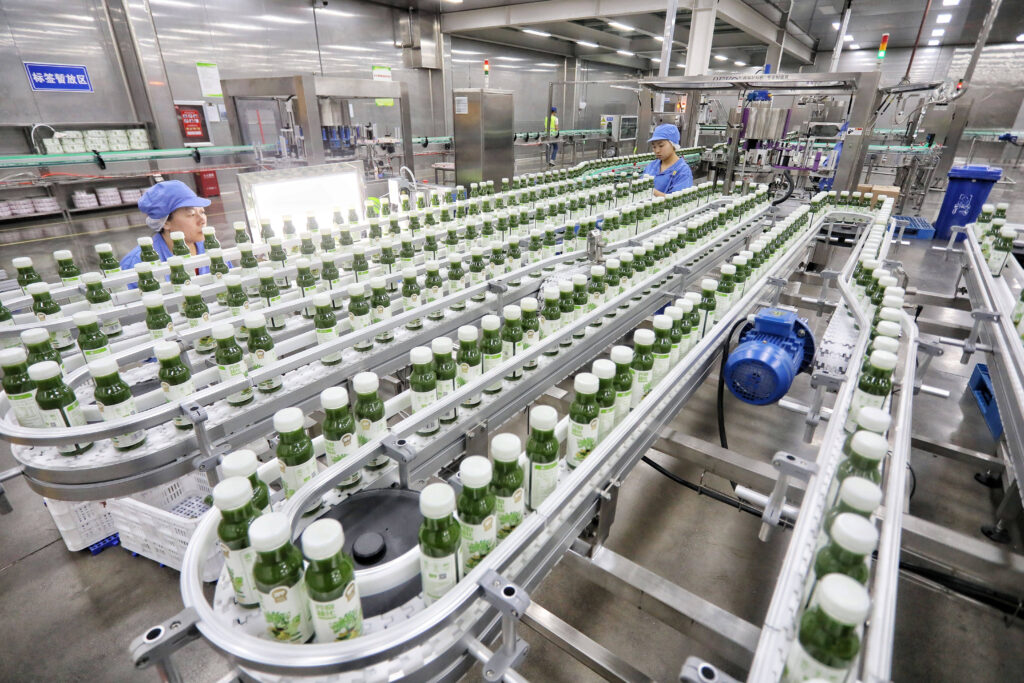
The sealing ring of the fully automatic beverage production line
equipment is aging and cracking, with gaps hiding materials and breeding of microorganisms
Distribution of beverage line sealing rings: filling machine valve group, pipeline quick fitting joint, plate heat exchanger, sterilizer, pump, tank hole, capping machine, UHT equipment, CIP cleaning interface.
The aging and cracking of sealing rings, assembly gaps, material residues, biofilm, microbial exceedance, flocculent substances, taste changes, and finished product contamination are typical sources of pollution in beverage factories.
The root cause of the problem
- The sealing ring itself has aged and failed
- Thermal aging: UHT and sterilization sections are subjected to long-term high temperatures (85-135 ℃) with repeated alternation of hot and cold; Rubber/silicone becomes hard, brittle, cracked, and loses elasticity; Microcracks appear, some of which are difficult to detect with the naked eye, but cracks
Internal sugar, juice, and protein materials cannot be washed into the gaps by CIP cleaning solution.
2) Chemical corrosion: fruit acid and citric acid in beverages; Long term erosion of CIP acid-base cleaning agents (sodium hydroxide, nitric acid); The sealing ring swells, shrinks, and has micropores on the surface.
3) Mechanical damage: installation squeezing, disassembly scratching, squeezing deformation (indentation cannot rebound), forming grooves and corners, accumulating materials.
Key point: Many sealing rings look intact on the outside, but there are already micro cracks inside. There is material hidden in the gaps, which cannot be seen through regular visual inspection
2. Assembly and structural gaps (not due to damaged sealing rings, but also due to dirt accumulation)
- Incorrect selection of sealing ring: incorrect material selection, incorrect cross-sectional dimensions, and inappropriate compression capacity; Compressing too much will accelerate aging; Insufficient compression may result in small gaps.
- The joint flange is not aligned or misplaced, and the sealing ring is partially squeezed out, forming a narrow slit.
- Groove processing wear, scaling inside the groove, and the sealing ring cannot fully fit the groove, forming gaps.
The gap between the groove and the sealing ring is a critical area for biofilm production. It is difficult for CIP cleaning media to penetrate the small gaps, causing long-term material retention and breeding of bacteria and mold, which poses a high risk of intermittent production.
- Shortcomings in cleaning process
CIP cleaning only flushes the main flow area of the channel; Minor cracks, insufficient flow rate of cleaning solution, and inability of cleaning solution to replace residual materials in the gaps;
Sugar, juice, and protein residues form biofilms in the gaps;
The acidity and alkalinity of CIP can only kill surface microorganisms, but not all microorganisms inside the biofilm; During downtime, reproduction occurs, and the next time the machine is turned on, it is washed away by the material and carried into the finished product, causing a batch of bacterial infections.
On site identification and troubleshooting methods
- Visual inspection
Disassemble and inspect the sealing ring: check for surface cracks, fissures, falling blocks, swelling and sticking, indentation and depression; The cross-section of the sealing ring is deformed.
Many microcracks need to be disassembled and observed under strong light, and the assembly status of the equipment cannot be seen. - Touch check
Qualified sealing ring: smooth and elastic surface; Aging parts: hard, sticky, rough surface, with cracks appearing on a single nail scratch. - Trench inspection
Remove the sealing ring and inspect the sealing groove for corrosion pits, scale buildup, and wear; The groove is damaged and there are still gaps when replacing the sealing ring. - Microbial indirect judgment clues
Suspect contamination of the sealing angle if the following situations occur:
CIP verification is qualified, but the intermittent microorganisms in the finished product exceed the standard;
Before starting up, a few cans of beverages appeared to have flocculent substances and a strange odor, but production improved after a period of time;
Intermittent production with the same equipment has a higher probability of bacterial contamination than continuous production. - Can be used for smear sampling: Microbial smear testing can be performed on sealing rings and grooves to confirm the microbial load in the gaps.
Solution for aging of sealing rings in beverage production lines
- Correct selection of sealing ring material (mainstream in the beverage industry)
- EPDM (Ethylene Propylene Diene Monomer) rubber: used in juice, tea drinks, acidic drinks, acid and alkali resistant CIP, resistant to medium and high temperatures, and widely used in beverage production lines.
- Food grade silicone: high-temperature sterilization, sterile filling; Attention: Some silicone gels are not resistant to high concentrations of strong alkali, depending on the formula. Prohibit ordinary rubber and non food sealing rings from rapidly aging and cracking in the presence of beverages and cleaning agents.
Key points: It is necessary to confirm compliance with food contact standards, resistance to CIP acid and alkali, and tolerance to high equipment temperatures. Different workstations cannot mix sealing rings.
For the UHT ultra-high temperature section, special EPDM with a resistance of 135 ℃ or above should be selected first, as ordinary sealing rings can crack in a short period of time.
- Control the reasonable compression amount and eliminate gaps
Sanitary sealing compression standard:
Circular O-ring: compressed by 20-30%;
Sanitary grade clamp flat sealing ring (pipeline quick installation) compressed by 15-25%.
Excessive compression: rapid deformation and cracking of the sealing ring;
Compression too small: The seal is not tight, and there are gaps and hidden materials. The flange joint should be aligned and the sealing ring should not be displaced or squeezed; The clamping force should be uniform and not forcefully tightened. - Trench maintenance
Corrosive pits and wear appear in the groove, and only replacing the sealing ring is useless. The groove needs to be repaired or the joint needs to be replaced. Thoroughly remove scale from the trench during each disassembly and inspection, and there should be no residual scaling particles. - Replace cycle management, do not wait for cracking before replacing
The sealing ring is a consumable part, do not replace it if it is damaged:
UHT、 Sterilization high-temperature workstation: EPDM is recommended to be replaced regularly every 3-6 months;
Room temperature filling station: 6-12 months;
Even though the appearance appears intact, internal microcracks have already formed after repeated thermal fatigue.
Establish a spare parts ledger and maintain inventory of spare parts of the same model. - CIP cleaning process optimization, targeting sealing gap angles
- Increase the turbulent flow velocity of cleaning solution in blind spots; Ensure sufficient CIP reflux;
- When the equipment is stopped, do not leave it idle for a long time with the material; Immediately execute CIP upon completion of production, and firmly embed the material into the sealing ring crack after drying up, making it difficult to clean.
- Intermittent production: Add pre rinsing/SIP sterilization before starting up to eliminate dormant microorganisms in the gaps;
- Regular disassembly and cleaning: Key valve groups and joints should be disassembled regularly, and the sealing rings and grooves should be manually cleaned. CIP cannot be relied on, as it cannot thoroughly clean micro cracks.
Important: The cracked sealing ring cannot be repaired by cleaning or disinfection, and the material and biofilm in the gap cannot be removed, so it can only be replaced directly. - Structural optimization (new project renovation)
Firstly, choose a hygiene grade design with no dead corners; Minimize ring sealing points as much as possible; First, use a complete sanitary grade connector to avoid excessive detachable sealing points; Avoid creating narrow gaps for storing materials.
Daily Inspection Checklist
- Visual inspection of key workstations after each CIP and batch change;
- Regularly dismantle and inspect the sealing ring to check for cracks, swelling, and pressure marks;
- Check the sealing groove for corrosion and scaling;
- Strictly replace according to the cycle and do not judge based on appearance;
- It is forbidden to use sharp tools to scratch the sealing surface when disassembling and assembling the sealing ring;
- Install the sealing ring to keep it clean, and do not allow residue particles to be trapped between the sealing surfaces.
Common Misconceptions
- “Continue to use the sealing ring if the outer surface is not broken” – internal micro cracks are invisible to the naked eye, and the hidden material is contaminated with bacteria;
- If the sealing ring is damaged, only the sealing ring needs to be replaced, but if the groove is corroded and worn, it will not be treated and still contain dirt;
- We hope to strengthen CIP cooking and solve the problem of internal microorganisms in the cracks of the sealing ring; The crack gap cleaning agent cannot reach, it can only be replaced