
What Machinery Is Needed to Build a Bottled Mineral Water Processing Plant? – Fully Automatic Bottled Mineral Water Production Lines Equipped with Filling Line Machinery
How is a bottle of mineral water produced? What equipment makes up a mineral water production line? Bottled natural mineral water refers to uncontaminated water that naturally flows from deep underground or is collected through artificial wells. It contains a certain amount of minerals, trace elements, or other components. The water source must originate from underground, and its dynamic indicators—such as chemical composition, flow rate, and water temperature—must remain relatively stable within the range of natural cyclical fluctuations.
Characteristics: First, it is natural, without any unnecessary artificial processing, especially the addition of substances; second, it contains minerals and trace elements beneficial to the human body; third, the water source is scarce, and its development requires approval and authorization from local authorities.
Production Process
Water Collection: Groundwater is collected at the source via drilling or directly from springs, ensuring the water source remains uncontaminated.
Filtration: Methods such as sand filtration and activated carbon filtration are used to remove impurities, including suspended solids and organic matter, from the water.
Sterilization: Methods such as UV sterilization and ozone sterilization are typically employed to eliminate bacteria and viruses in the water, ensuring water quality safety.
Bottling: In a sterile environment, the treated mineral water is bottled into sterilized containers and sealed for storage.
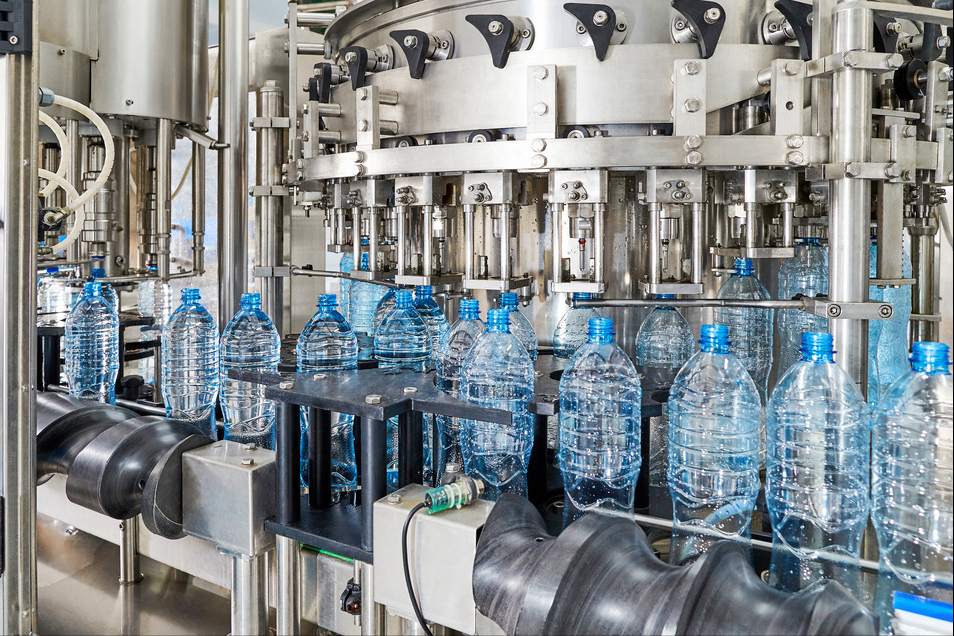
Bottled Mineral Water Production Equipment: This bottled mineral water production system incorporates ultrafiltration membrane-based equipment and a three-in-one small-bottle filling machine. The three-in-one filling machines in this bottled mineral water production line are available in capacities of 3,000 bottles/hour, 5,000 bottles/hour, 8,000 bottles/hour, and 12,000 bottles/hour. The entire bottled mineral water production line is fully automated, with the following specifications:
The equipment integrates rinsing, filling, and capping into a single unit, suitable for the filling and production of various purified water, mineral water, juice drinks, and tea beverages. With simple adjustments to certain components, this machine can also be used for the filling of purified water and mineral water. It employs microgravity vacuum filling technology, ensuring faster, more stable, and more accurate filling. The equipment is equipped with a comprehensive recirculation system to prevent secondary contamination and oxidation of the beverage; it meets the technical requirements for hot filling at temperatures below 95°C and is equipped with a CIP cleaning system capable of cleaning liquid-contact areas such as tanks and pipes; It incorporates advanced technologies such as HMI touchscreen control, PLC computer control, and variable frequency drive control.
Mineral water is a beverage we consume frequently, generally used for hydration. Aside from boiling water at home, we often drink bottled water or large jugs of water when out and about. Many people are undoubtedly curious about how bottled mineral water is produced. First, it’s important to note that bottled mineral water is also known as packaged drinking water. To understand how mineral water is produced, we must first understand what is required to establish a water plant.
- Water Source: A key technical aspect of water production is securing a high-quality source, such as mineral water, mountain spring water, or even hot spring water. Selecting suitable raw water requires preliminary surveys and careful selection of the site for the plant.
- “Water Filtration System”: The primary component of bottled water is water. Water from many sources may be used as the raw water supply. Generally, such water contains minerals beneficial to human health, but it cannot be consumed directly. Therefore, a fully automated raw water filtration system must be installed to filter it.
- “Bottle Blowing System”: Bottled mineral water typically uses empty plastic bottles. These plastic bottles serve as containers for drinking water and are made of single-use material, requiring a new bottle for each use. These bottles are produced using a machine called a “blow molding machine.”
- “Three-in-One Filling Machine”: Bottles must be rinsed before use. This process uses sterile filtered water for rinsing; the rinse water is drained from the bottles, followed by the filling of beverages or water. After filling, caps are applied and the bottles are sealed. Combining rinsing, filling, and capping into a single unit is known as a three-in-one filling machine.
- Capping System: Pre-purchased caps are sorted by a fully automatic cap sorting and feeding machine, then fed into a cage that transports them to the top of the capping machine. The capping machine is then used to seal the bottles.
- Labeling Machine: Although the water has been filled and sealed, the outside of the bottle remains blank with no information. Pre-printed labels are purchased, and a machine is used to automatically and accurately apply these self-adhesive labels to a specific position on the bottle; this is the labeling machine.
- Packaging Machine: Simply labeling the bottles is not enough. They must also be packaged to prevent them from being scattered. A packaging machine bundles the bottles, making the products easier to handle. There are two types of bottled mineral water packaging machines: the “plastic bottle packaging machine” and the “carton packaging machine.”
- Transport Equipment: Once the water is produced, staff use hand pallet trucks or forklifts to transport it to the warehouse or onto vehicles.